Dear friends,
Firstly, thank you so much for taking the time to know more about our mission journey and partnering with us. We value your friendship and fellowship, and so glad that we are doing this together and not by ourselves!
At our deputation, we shared to our church partners about:
Christianity in Japan
How both of us came to know Christ (we both came from Buddhist background, and by God’s grace through different people sharing to us the word of life and Jesus’ love, we came to faith)
What we learned at St Andrews Hall (4.5months cross cultural training)
What ministry we’ll be seconded to
What life in Japan might look like for the first few years
Counting the cost
Invitation to partner
In this post, we would share 4-7 :)
4. What ministry we’ll be seconded to in Japan
We will be seconded to A3, a new mission partner in Japan for CMS. This means we’re the first family from CMS (actually, even from Australia) that will be working with A3. And if things go well, hopefully more CMS missionaries will work with A3 in the future. This is really exciting! A3 is a leadership development and church planting network that have been in Japan since it began in 1967.
They train church pastors to plant new churches, and they do this in cohorts so that church planters are not doing this important task alone.
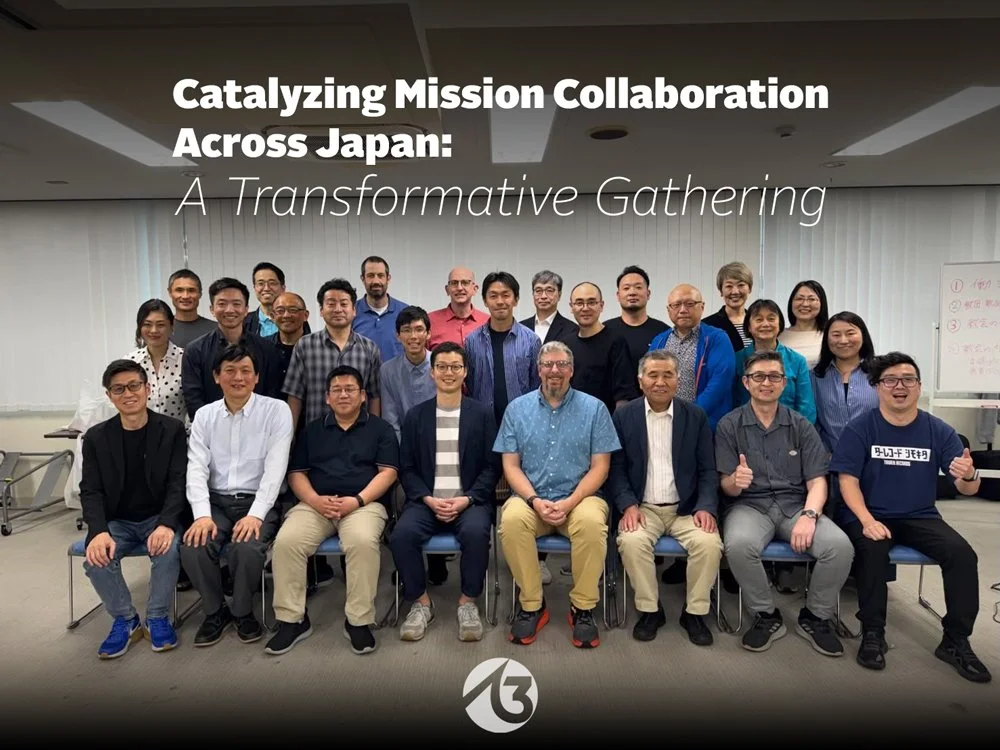
Missional Partners
We will be coming in as “missional partners”, working under local Japanese pastors as they begin new local Japanese churches in unchurched areas.
A3 view missionaries as catalysts – the idea that we are those who energise, support, model and encourage the church planters so that church movements, leader capacity, and disciple-making are multiplied — with local leadership taking greater responsibility over time.
The missionary as catalyst is less about being the hero, and more about being the spark and support for something much larger that is intended to grow locally and sustainably.
But to do ministry long term with A3, we’d need to learn Japanese.
5. What life in Japan might look like for the first few years
While we don’t yet have a specific location, we do have a general picture of what life in Japan might look like in our first few years. Here are a few things:
Language Learning
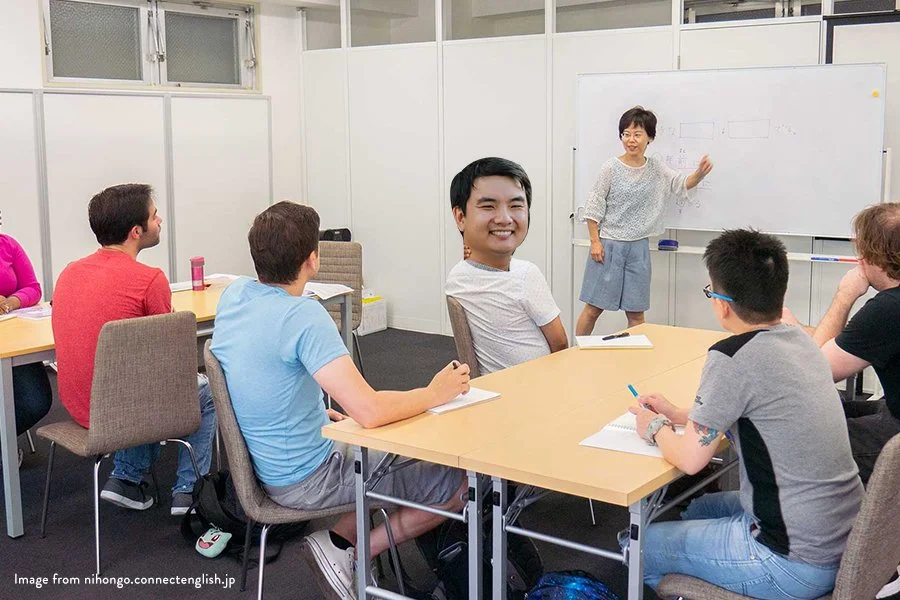
As part of CMS’s cross-shaped approach to mission, we are committed to learning the Japanese language. A “cross-shaped” approach means we don’t come with a saviour or power mentality. Instead, we come in weakness, seeking to point people to our true Saviour, Jesus.
Learning the local language says a lot—it communicates that we care, that we love, that we want to know people and do life with them in their heart language. It’s not about asking them to adapt to us, but about us adapting to them. We hope this will open doors to share the hope we have in Jesus.
For Tony,
this might mean learning Japanese in a formal setting, attending language school daily.
For me (Yenli), it may look different. I really value being home and spending time with the kids, especially during their early years. So I’d like to do the same with Kai as I did with his older brothers, and we hope to find a tutor who can come teach at home if that's option is available.
Living Life Where the Locals Live
We want to live where our neighbours live and do life the way they do—that will involve finding the local grocery store, playgrounds where children play, discovering the library, being involved in school community. We hope to be a known and visible presence in our community. These everyday experiences are also great opportunities to practice the language and build relationships.
I’m sure we’ll make a lot of mistakes, but this is where we learn to be vulnerable—and we trust that God will use even our weaknesses to grow connections with those around us.
Whilst not being able to speak the language, I’m sure we will still have opportunities to connect. One small example is from our trip to Hokkaido, Japan 2 years ago. This is a picture of L with a girl in a playground in Hokkaido during one of our trips. Lukas and this girl were obvious they wanted to play with each other as there were no other kids. And I had a toddler level Japanese up in my sleeve! So I asked her “Hi! This Lukas, together play?” And she understood! They played together for almost two hours, and the girl Emiru would speak to me in a few words such as swing, slide, cookies. I really wished I could speak more japanese, as her grandmother was just standing by the side. I look forward to unique opportunities like this when we arrive.

Living like the locals also means doing what they do—like walking or riding a bike to get around. So I’ll need to learn riding a mamachari (a “mama bike”), which is very common for parents with kids. Problem is, this won’t be easy as I actually can’t ride a bike. So please pray for me!
Adjusting as a Family
This adjustment applies to our kids too. We hope to send them to local public schools so they can be immersed in Japanese language and culture, and so they can make friends with Japanese children and families.
In Japan, from age six (Year 1), children usually walk or take public transport to school on their own—often in groups with their classmates. In fact, parents are generally discouraged (and sometimes even prohibited) from dropping kids off, as walking independently fosters responsibility and self-reliance. That’ll be a new experience for L.
Local Church Life
As Missional Partners with A3, we’re excited to be involved with the local church we’re assigned to. While our first few years will focus on language learning, we believe there are still many ways to serve even with limited Japanese. We can serve simply by being present and committed. We can help in practical ways—packing up, setting up, providing morning tea. We can involve our church family to help us in language, maybe even through reading the bible or bible story telling. And we’ll pray that God would grow our ability to speak, our understanding of the culture, and our love for Him and for those He’s called us to serve. That as we live our lives as parents, learners, mistake-makers, in our weaknesses we will exalt Jesus.
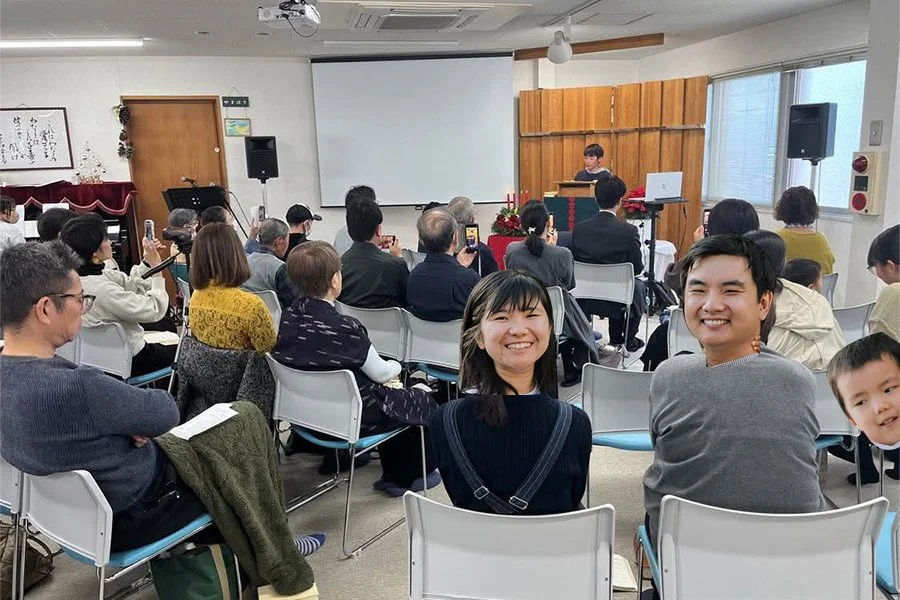
Here’s a lesser known quote by Jim Elliot, a missionary in Equador in the 50s:
“Missionaries are very human folks, just doing what they are asked. Simply a bunch of nobodies trying to exalt Somebody.”
There’s nothing extraordinary about what we will do in Japan – it’s living as faithful christians and we ask that God would use us so that others may exalt Jesus.
6. Counting the Cost
When we applied with CMS there was a question on the form:
What do you consider to be the costs for you and your family living/working cross-culturally?
1. Family. Most of our family lives in Sydney, and I share a really close bond with my siblings. Our kids and their cousins are incredibly close too — when the seven of them get together, they have the best time. When we spent a few months in Melbourne, they really missed each other. It breaks my heart to think the kids might not have many childhood memories together.
2. Identity. Leaving behind friends means leaving the safety of being known — by people who get you, who share your history. Some of you might have that here at this church. Imagine walking away from that, to a place where no one knows you — your story, context, even your jokes. What makes it harder is that we might start to wonder if we know ourselves, too. So much of what defines us — our routines, roles, confidence, and how others see us — can be stripped away. Even simple daily activities such as grocery shopping can suddenly feel unfamiliar or hard. The things that make us feel like “ourselves” become fragile, or even disappear. We’re aware that we might feel small in situations we used to feel so confident in.
3. Instability. Lukas is only 6, but he has lived in 5 different homes! There have been a lot of moving around with full time ministry, and might be more with overseas mission. Whenever we come back to a place we once called home, things might have changed—people have moved on, communities look different, and what was once familiar can feel unfamiliar again. For Lukas (and for us as parents), this instability can be unsettling.
Now, all of this sounds really hard — so why do we still go? Why not just stay, where things are familiar, where it feels safe and known?
A quote by David Livingstone (Missionary to Africa in the 1800s)
“If a commission by an earthly king is considered an honor, how can a commission by a Heavenly King be considered a sacrifice?”
This puts the so-called cost in perspective: it’s a joy to serve the King of Kings, even if that service requires real sacrifices. It’s a great joy to envision a Japan that knows Jesus.
And this heavenly perspective shape the way we see sacrifices too. In the loss of family members being nearby, we pray that God will help us rely even more to the church family in Japan. In the stripping of identity and loss of friends, we pray that this is when we rely on our core identity, as God’s children. In the lack of stability, we pray that this is when we anchor ourselves in the unchanging God.
And again, I can’t emphasise enough — we’re not going alone in this. You have an important part to play in caring for us while we’re on location. We need your prayers to uphold us before our loving Father. Caring for us might look like letting us know you’ve prayed, sending birthday cards to our kids so they know they’re remembered and loved even when they’re far from home, or asking if we need any resources sent from Australia. And if you’d like more ideas, feel free to chat with us — or check out the CMS website, which has a whole page of practical ways to care for missionaries.
7. Would you partner with us?
We have a wonderful Gospel for the people of Japan – Romans 10:13 says for, “Everyone who calls on the name of the Lord will be saved.” But Paul then asks a series of questions to consider: 14 How, then, can they (the Japanese) call on the one they have not believed in? And how can they (the Japanese) believe in the one of whom they have not heard? And how can they (the Japanese) hear without someone preaching to them? 15 And how can anyone preach unless they are sent?
Our partnership means that you are the ones doing the sending. You are sending us, so that, as we share lives with the Japanese, we can preach and share Christ, so that they can hear, believe and call on the name of the Lord and be saved.
We can’t do the work of proclaiming the good news of Jesus without God’s power. God is sending us to Japan. But we aren’t alone in this. You are also there with us, doing this important ministry, but our role looks different.
Your role in this Gospel partnership is to pray, give and care for us so that we can preach, so that the Japanese can hear, believe and call out to our Lord and Saviour. Your constant prayers provide us with the spiritual support we need. Your financial generosity provide us with the physical support we need.
We would love for you to express this Gospel partnership today by signing up to our prayer updates. We will send a monthly update to encourage you and shape your prayers.
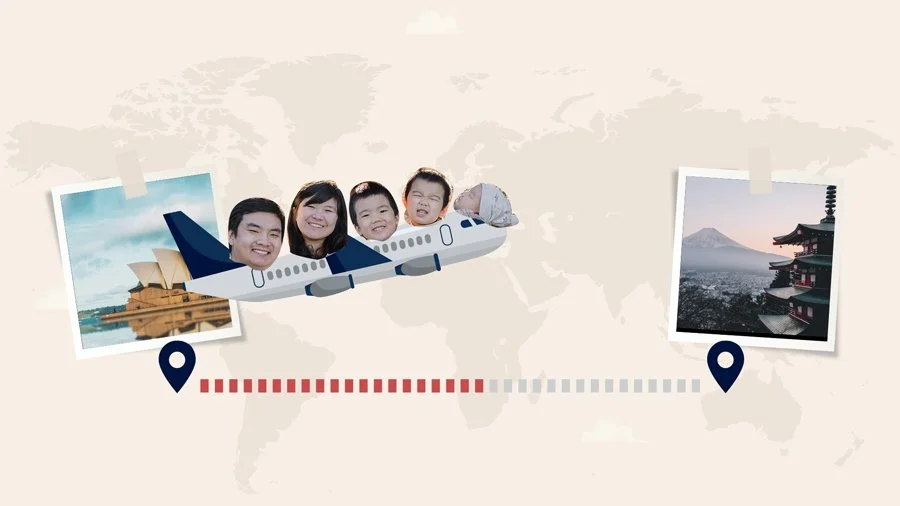
We also need your financial generosity so we can live in Japan and serve without carrying financial pressure, freeing us to focus fully on sharing the Gospel. We’re seeking 70 people who can partner with us through regular monthly giving. We are currently looking for another 5-10 individuals or families to be a monthly financial partners with us.
Some of you have offered a large one-off gift, and we’re really, really grateful for the support and generosity! But we also want to encourage you to consider spreading their giving over time. Regular support helps mission work in ways a single donation can’t. Just like giving to church helps the wardens plan staffing and ministries, steady monthly support helps CMS set a clear budget, commit to ministries, and support missionaries with confidence. It means they can provide for our family reliably, rather than wondering if resources will be there each year. Predictable giving also keeps supporters mindful of their ongoing partnership with us.
Even smaller monthly gifts are a great encouragement. They show that you believe in the work we are doing in Japan and are willing to stand with us for the long haul. We don’t set a dollar target amount, because we’d like you to give generously according to your situation.
Would you consider partnering with us by sending us to Japan to proclaim the good news of Jesus? Please pray and ask God how He might be leading you to be generous toward the work of the Gospel there. 🙏 Thank you so much for taking the time to read this and for considering how you can support us as we head to Japan, with the hope that many Japanese people will come to know Jesus, our precious Lord and Savior.